A Real Life Nightmare
* Disclaimer: this is a long post but I feel that EVERYONE needs to know about this horrible time in history. It’s a shame this was not highlighted more in my world history class. This blog post also may be difficult to read. *
Between 1975 and 1979, the Khmer Rouge ruled Cambodia and, in that time, they led a genocide that wiped out about 3 million people. The most fukd up part about it was this was a massacre against their own people. Cambodians killing off other Cambodians. They executed all professionals (doctors, lawyers), intellectuals (anyone with soft hands, wore glasses, spoke another language), anyone with connections to the previous government & anyone who wasn’t seen as a pure Cambodian - these people were thought to be a “threat to Angkor” & were questioned about being in the CIA or KBG.
I was told by friends that visited Cambodia that I HAD to visit where this genocide was carried out. A patron of our hostel, Scott from New Zealand, joined Mariah and I that day for a very morbid lesson in Cambodian history. We rode off in our tuk-tuk to start our day at the Killing Fields. Here, we were given an audio tour throughout the grounds. There was something eery and somber about this place - the vibe screamed death and despair.
A tree, deemed as ‘The Magic Tree', was far from magical. A big bodhi tree - the type of tree that Buddha sat under to obtain enlightenment - but no miracles happened here. There was a speaker hung from a branch that played loud music to drown out the shouting and moaning of people being brutally murdered to death. Those were the last sounds the victims ever heard. It was difficult walking around the grounds knowing that thousands of people unjustly lost their lives here. My feet walking on the dirt of these mass graves that thousands of bodies laid in. Like walking in a cemetery except knowing that these people died in a horrific way.
Of all the graves on the property, the one that’s probably most unsettling is what is known as the “Killing Tree” - the tree that babies were held by their feet and swung against. Why kill babies and children? The Khmer Rouge feared they would grow up and want to seek revenge for the loss of their loved ones later in life. This would prevent that from happening. Hundreds of colorful yarn bracelets hang from this tree and the bamboo fence that surrounds it to honor the lives that ended too soon.
One of the leaders, Duch, who was in charge of the S21 prison willingly admitted he was accountable for all the deaths that happened at the prison. He is the only Khmer Rouge leader still living that went to trial and is now serving life in prison for this hateful crime. The audio tour provided stories from survivors which were hard to listen to. One man had to kill a child - forced to or he’d be killed. And that’s how the Khmer Rouge worked - not all of them were raging sociopaths. Most were just carrying out orders to save their own asses. Like the Jews, the victims were forced to work in fields from sunrise until after sunset. They’d arrive to this field in trucks, not knowing where they were being taken to - in the dark, in shackles, maybe never given the chance to say goodbye to family, not knowing they weren’t coming back home. Guns were rarely used for the killings. Knives, sticks, poles and garden tools were used to strike these people to their death.
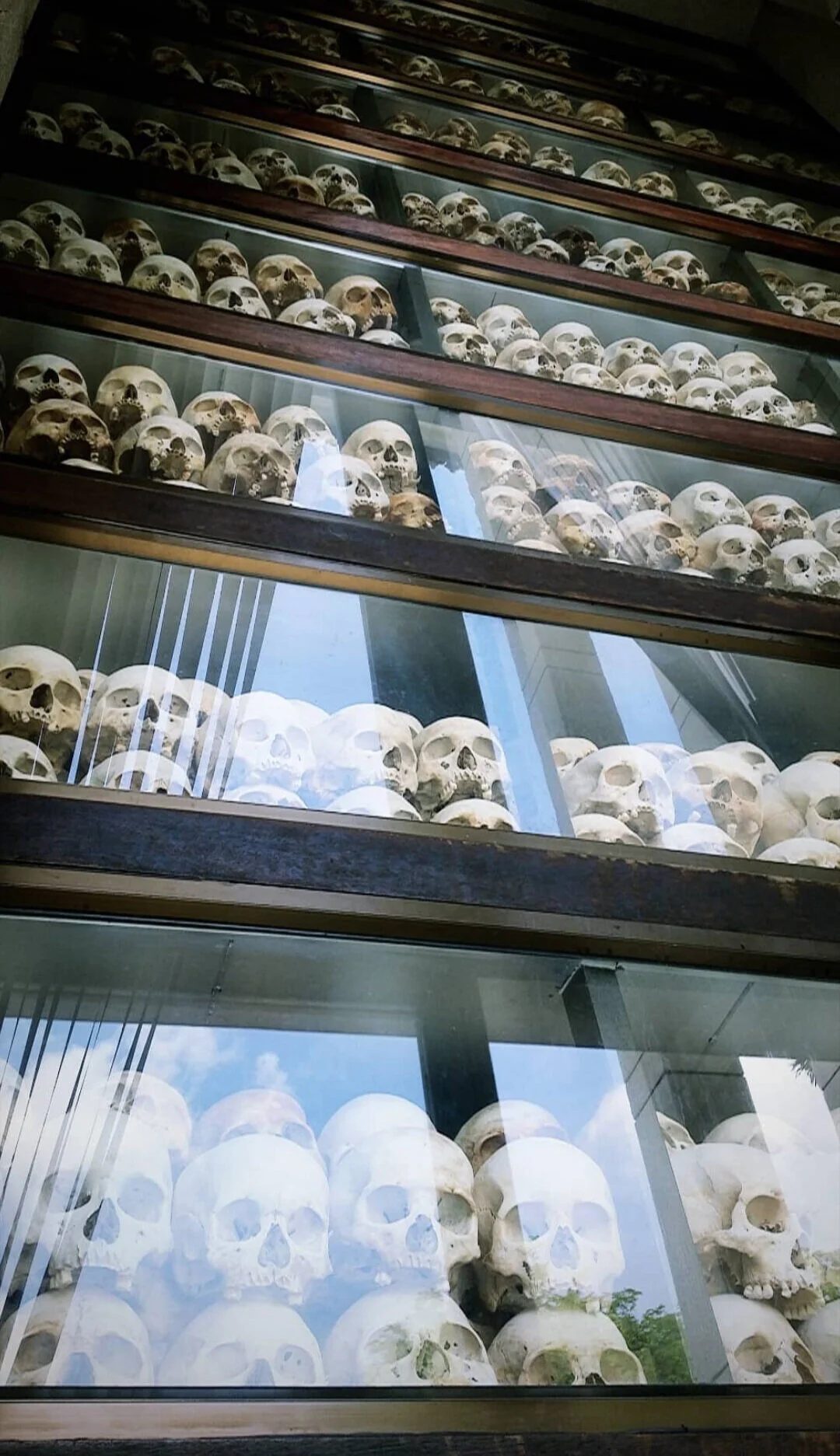
Every two or three months, new bones, teeth or rags come up to the Earth’s surface on these grounds. At the end of the this tour there was a tall, glass tower that showcased hundreds of skulls and other body parts. They were categorized with stickers that indicated male or female & how they were killed. There is also a showcase of clothes that were stripped from the woman and children. You may also see strips of cloth used for blindfolds or cords that were used to bind hands. They are displayed to help us remember those who came here and never left.
Next, we were taken to S-21 which brought on even more of an unearthly, hair-raising vibe. S-21 was an old high school that functioned as a prison during the regime. Now it serves as a museum. In the first building, there’s one iron bed in each room. Bars on the one window. Concrete walls. Blood stains splattered on the tile floor. Black and white photos of people chained to the bed. They were tortured until they falsely admitted their connection to various government groups and then killed. An estimation of at least 12,000 Cambodians suffered here. One survivor of this prison stated he was placed in a wooden cell where they were chained up & given a box to use as a toilet. They had to be careful not to tip it or they’d be made to lick it up clean. Victims here were submerged underwater as a torture technique. Hung from rope by their feet and dipped head first into human waste until they wrongfully admitted to being a part of these government groups. Whipped. Beaten. Little food. “Doctors” (not real ones because they were being killed off) pumped these people with meds to keep them alive, only to continue torturing them.
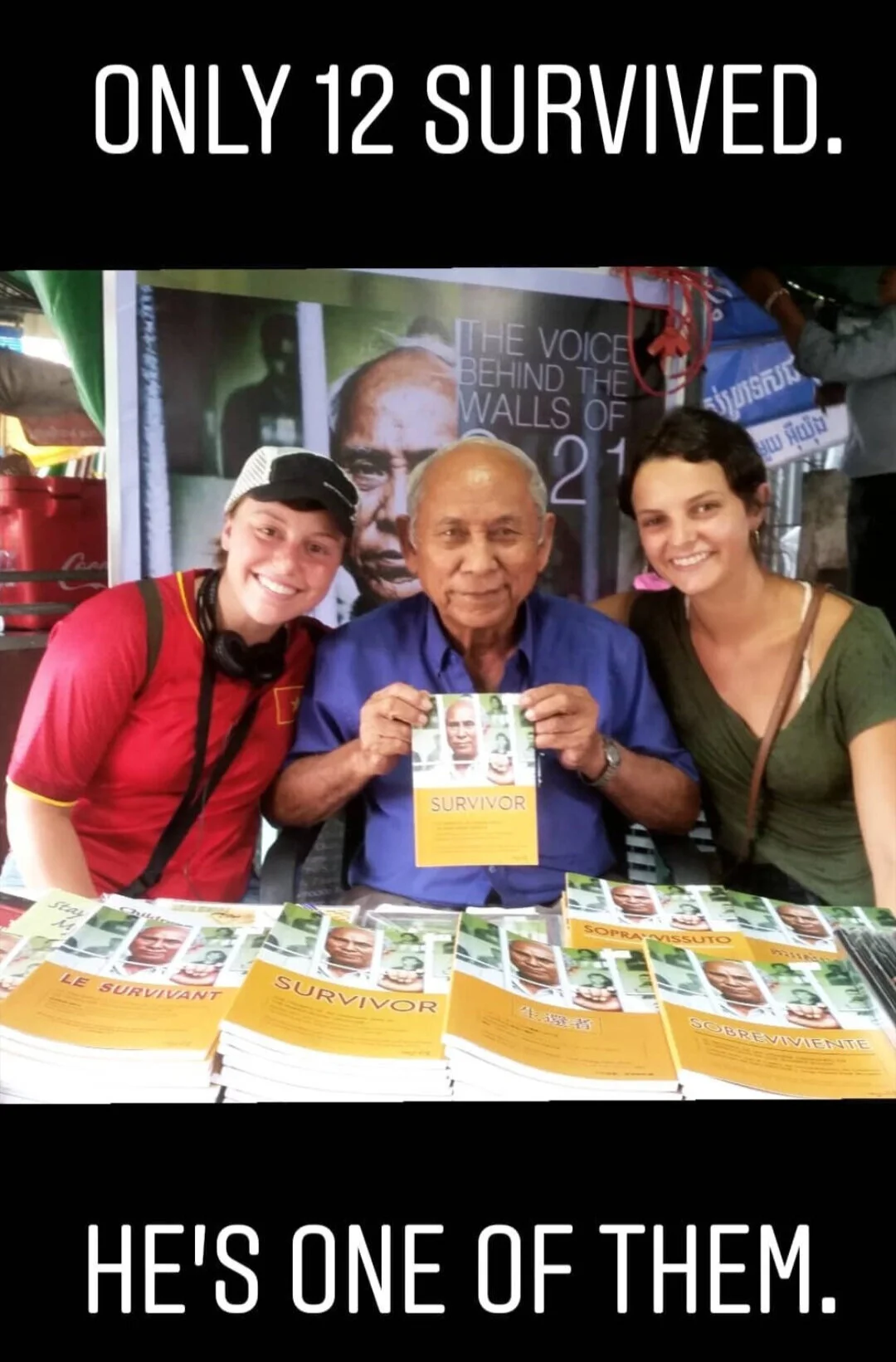
Twelve people survived this prison. Mariah and I got to take a picture with one of those lucky guys. What do you even say to somebody that lived through a legitimate hell? He seemed like a happy guy judging by his smile but you can see pain in his eyes. I can actually see pain in many of the faces here in Cambodia. What they have been through is unlike any struggle I’ll probably endure. Their fellow Cambodian people, turning into barbarians & carrying out a 2 million victim genocide. And this happened in the mid 70’s - this wasn’t even that long ago! Some of you reading this were alive when it all took place! If these people weren’t actually killed, they died of starvation, dehydration or exhaustion. I don’t see how anyone affected by the Khmer Rouge regime could go on to live a normal life. I look at the Cambodian people so differently after everything I’ve learned. And despite their hardship, they have proved to be the most welcoming people we have met along the trip! Asking how are day is and if they can help us with something. I’ve heard two people now say “have a good life”. When talking with anyone in this country whether it be the tuk-tuk driver or a store keeper, I just want to hug them and cry. This puts me in check & makes me feel so grateful for the life I was born into. To be American in general. Learning about this genocide in history books will not measure up to a conversation with anyone in Cambodia over the age of 40. I hope these people can find peace & live a life that’s opposite of this nightmare in their next life.
* For anyone who’s looking for something to watch during this quarantine - First They Killed My Father (found on Netflix) and The Killing Fields are excellent films that depict the stories of people who lived through this regime. I also bought the book this survivor wrote if you’d like to jumpstart your summer reading!